
























 0

EU agricultural markets are being shaped by a combination of extreme weather events, elevated input costs, trade disruptions and volatile macroeconomic conditions. Severe summer heat and drought led to a significant downward revision of yields for summer crops and reduced grassland biomass while tightening feed availability. Despite this, late August rainfall was beneficial for the sowing of winter cereals. At the same time, the ongoing geopolitical instability in the Middle East and Ukraine have raised energy and transport costs, with disruptions in key shipping routes increasing uncertainty for trade and logistics. Fertiliser affordability, driven by expensive gas and supply constraints, remains challenging for EU farmers. More broadly, slow economic growth, persistent inflation and exchange-rate movements are challenging for EU competitiveness. Despite these pressures, oilseeds are proving resilient.
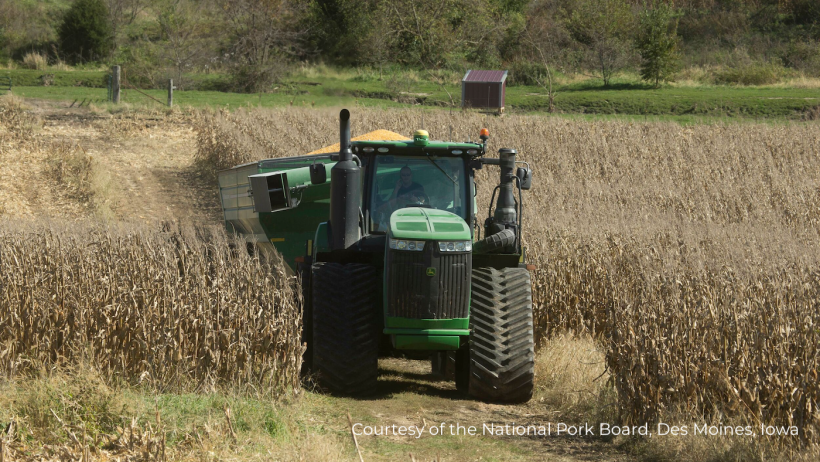
EU cereal production in 2026/27 is estimated at 262 million tonnes, down 9.6% year on year and 4.7% below the five-year average. This sharp reduction is due to extreme heatwaves and severe drought in key cereal production regions. EU maize production is most affected and is expected to fall 20% below the 5-year average to 48.5 million t. Winter crops were less exposed. Soft wheat production is expected to decline by less than 2% from the 5-year average to 124.2 million t, while barley stands out at 5% above the five-year average, supported by a record crop in Romania. Due to lower domestic availability, imports of maize in 2026/27 are projected to increase to 25 million t, up 5.7 million t from the 2025/26 level. Soft wheat exports are projected to remain stable at 29 million t thanks to ample beginning stocks. Overall, net exports of cereals in 2026/27 are projected at 10.2 million t, compared to 18.1 million t in 2025/26.

EU oilseed production in 2026/27 is estimated at 31.3 million t, or 0.3% below 2025/26, but 1.8% above 5-year average. Soybean production was most affected by the drought and is estimated to be 19% below the 5-year average at 2.2 million t. Rapeseed production is expected to be 3.2% above the 5-year average thanks to a bigger cultivated area, although 3.8% below 2025/26, while sunflower production is up 5.3% both because of an increase in area and above average yields in Romania and Bulgaria. Vegetable oil production is also projected to increase to 16.8 million t (+ 1.7% over 5-year average), while imports of soybean meal are expected to increase to 20.5 million t (+17% over 5-year average) to compensate for lower domestic production and an increase in feed demand.
October 2026, European Commission/ European Union.
https://agriculture.ec.europa.eu